Agriculture
11/27/2025
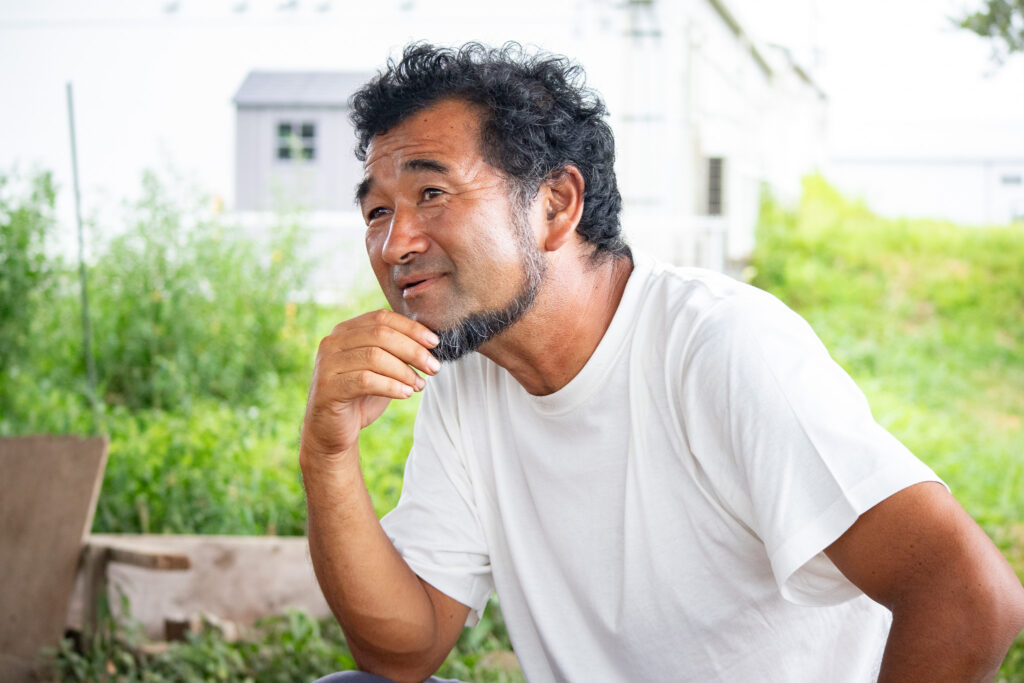
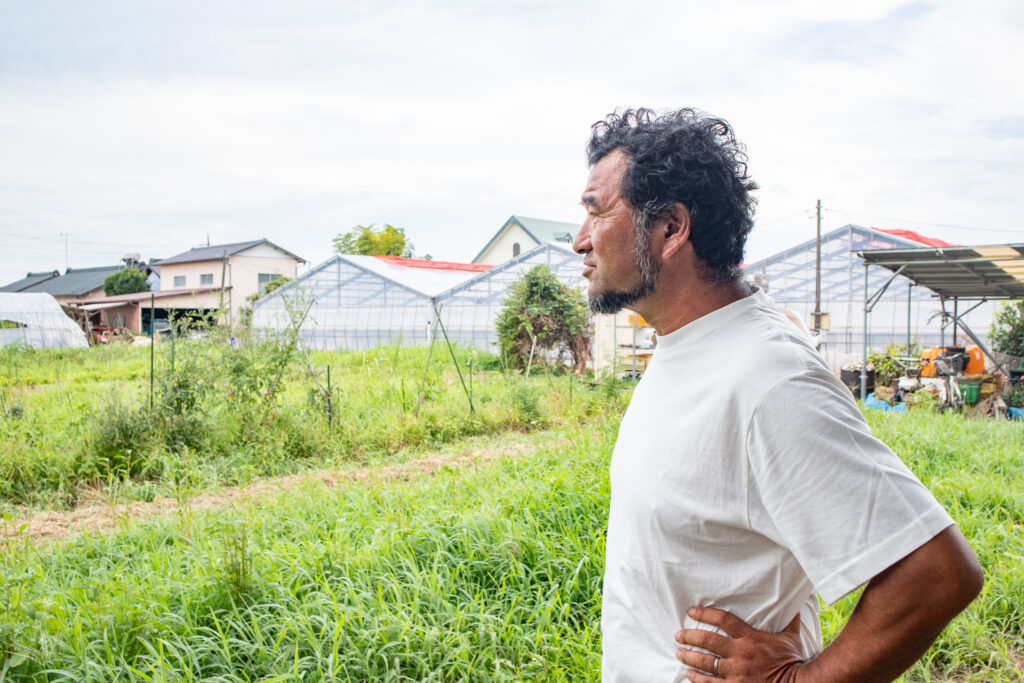
At Niko Niko Farm in Fujisawa City, Kanagawa Prefecture, the motto is “Growing vegetables without relying on pesticides or chemical fertilizers.” They practice no-till farming, fostering an organic relationship between nature and people. Hiroteru Inoue, the owner of Niko Niko Farm not only explores a new form of agriculture that works with weeds to protect vegetables and leverages the power of soil microorganisms, but also pursues a wide range of challenges, including raising hens and honey bees, producing artisanal seasonings, and creating a universally accessible farm.
In the first part, we heard about Niko Niko Farm’s story and their passion for agriculture. In this second part of the interview, they will share details about the farm’s vision and the future they are co-creating with Lively.
Hiroteru Inoue
Owner, Niko Niko Farm
Established Niko Niko Farm in 2008 and began operating as the “NPO ma,icca!! Niko Niko Farm” in January 2023. Drawing on over 10 years of organic farming experience, he focuses on face-to-face vegetable sales centered around local markets while also creating spaces that connect a diverse range of people. He accepts trainees and engages in agriculture-welfare collaboration.
He actively participates in co-creation activities with companies, such as joining Panasonic’s production for local consumption project “Hakkutsu!”. To increase exchanges with the community, individuals, and organizations, and to leave better soil and community foundations for the next generation, he is dedicated to building a universal farm where everyone can engage with the natural world with dignity.
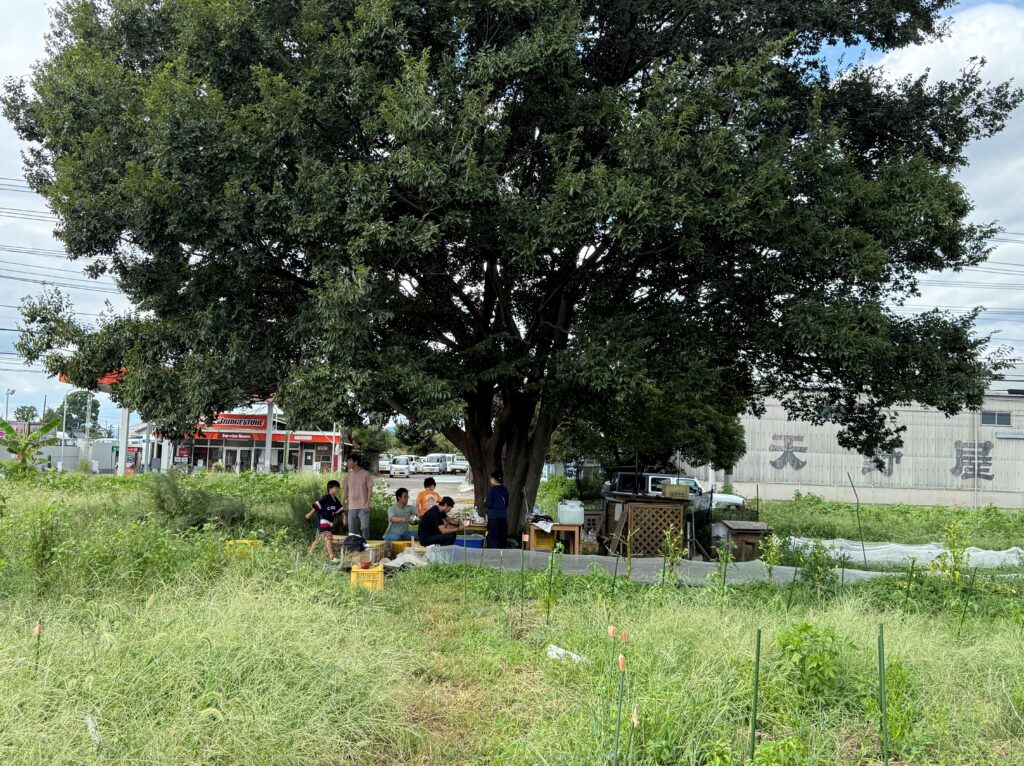
Inoue: At first, I wondered, “What kind of people are they?” But as we talked, I felt the strength of everyone’s commitment to the natural environment. It was wonderful to meet people who share the same passion to do something to make the Earth a pleasant place.
Inoue: We’re truly grateful to everyone at Lively. You have given us advice where we lack experience and run alongside us as partners. Ideally, we should be envisioning our goals while running the farm, but I’m not good at juggling multiple things at once. I tend to get too caught up in the fieldwork, so I want to treasure the insights gained from talking with everyone and build my capabilities step by step.
Nakamura: Things we vaguely hoped for, like “it would be nice if this happened,” start to feel realistically achievable when we think about them with the Lively team. Even with grant applications, last time I waited for the results thinking “there’s no way this will work,” but now I find myself waiting excitedly. Even if the outcome isn’t what we hoped for, I’m happy to feel we’re making progress. Your presence is truly reassuring.
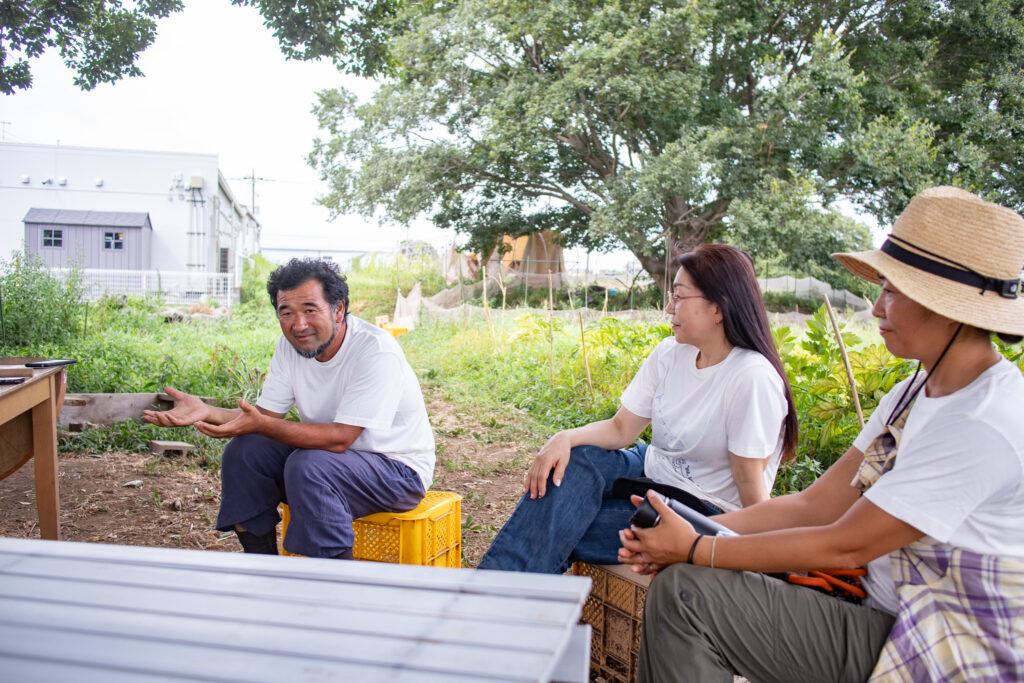
Inoue: Both Lively and us have mountains of things we must do until Earth becomes a pleasant place. Clean the soil, clean the sea, clean the sky… Only then might our work finally be done.
Even if my vegetables don’t grow well, it doesn’t bother me at all as long as it helps the Earth heal. I might get a little hungry, though. I want to start by creating that kind of movement.
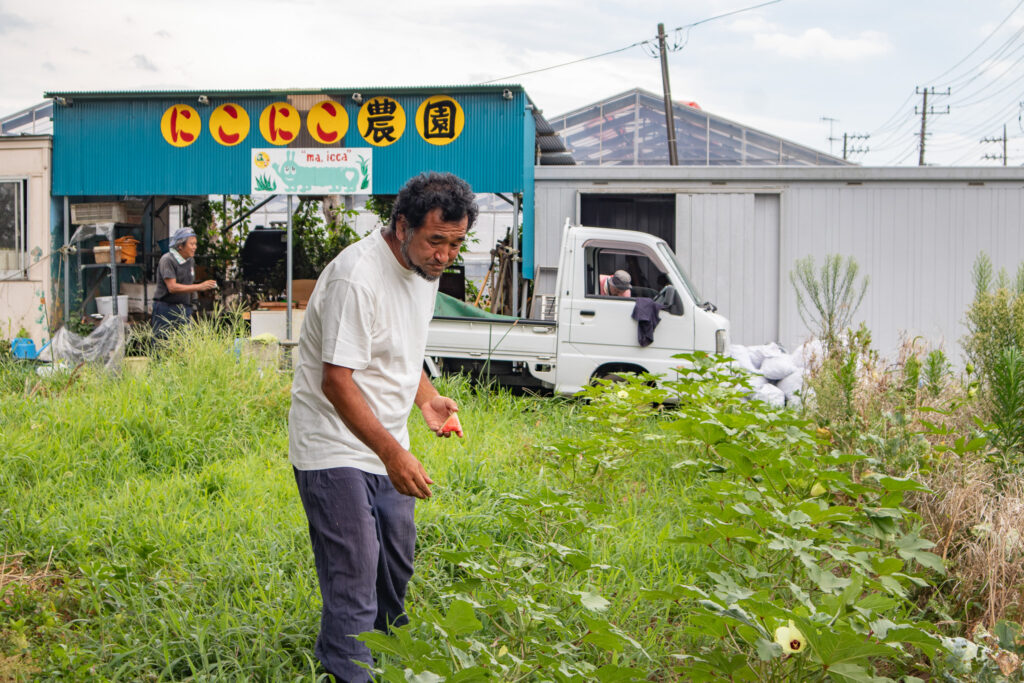
Inoue: Our current goal is rebuilding rich soil. While plow-based farming yields vegetables quickly, it destroys soil structure. Farming methods that produce temporary harvests but gradually deplete the soil aren’t what I want to do. Wanting to harvest vegetables is human ego, so ideally, we’d want a method where “the more you do, the richer the soil becomes.” We’re experimenting with farming methods that involve working with the soil daily and only intervening where truly necessary.
Inoue: As I mentioned earlier, considering not just people but nature and other living things naturally led me to this farming method. We use various techniques: laying weeds to protect seedlings from the intense summer sun, planting vegetables next to each other to encourage positive interactions, and planting legumes to boost microbial activity. We also utilize cut wood, branches, and animal manure as fertilizer, aiming for a fully cyclical farm system.
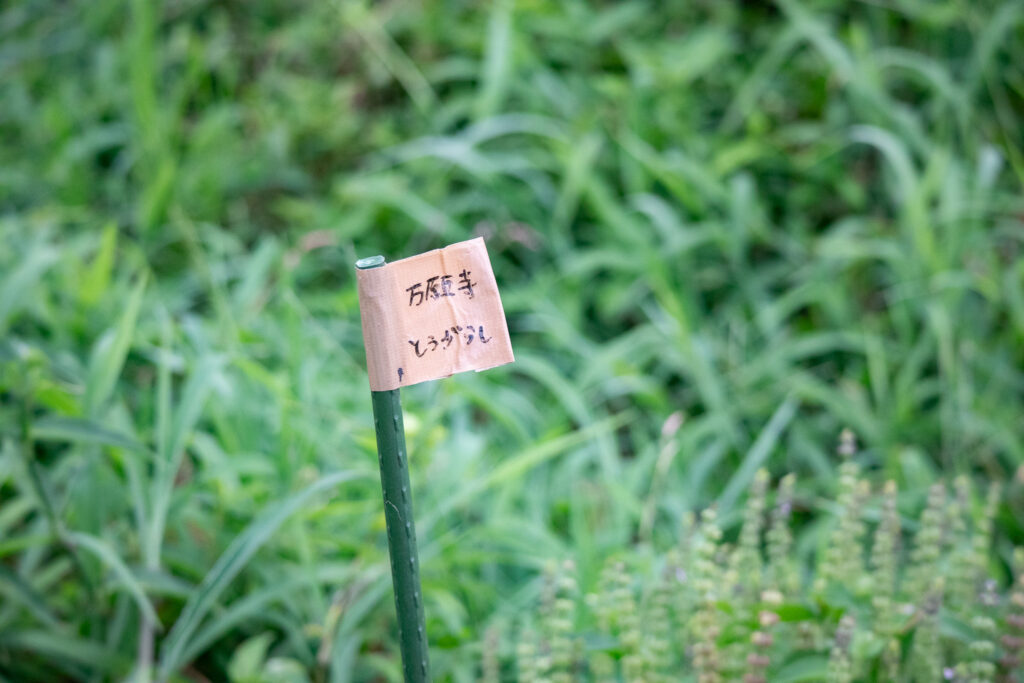
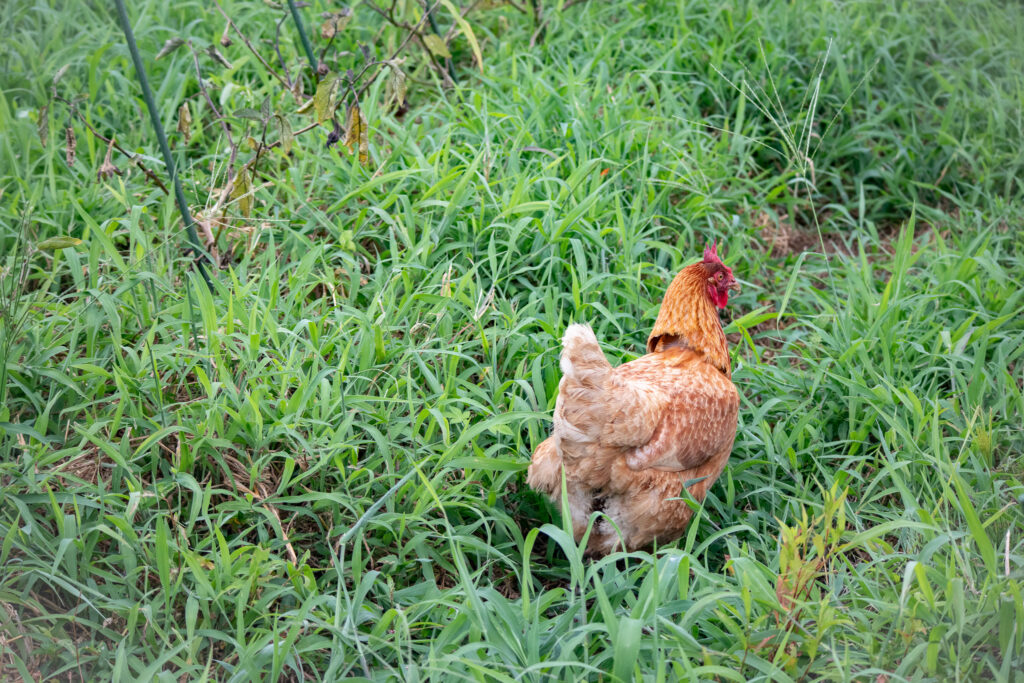
Inoue: Previously, we sowed seeds based on harvest timing, but recently I’ve started wondering, “Isn’t the time when seeds form the right time to sow?” So, I’m experimenting by leaving some vegetables unharvested and waiting until the seeds naturally fall. This is a challenge only possible with no-till farming, where vegetables remain in the field. It’s fascinating how vegetables we didn’t sow sprout with each passing season. Eventually, I hope we can grow vegetables without sowing seeds and simply harvest them while taking a stroll.
Inoue: By farming while sensing the natural rhythms of the soil and plants, I feel I’m learning things I never could before. While it’s challenging not always getting the harvest I planned, I think my sensitivity to receiving nature’s messages is sharpening. Going forward, I want to pursue interesting forms of agriculture while also building the foundation for management and operations.
Inoue: Moving forward, I want to create more opportunities to share the appeal of agriculture with even more people. Farming has universally relatable charms—like “Food is important, right?” and “Eating together is fun, isn’t it?” I want to leverage that potential to build a farm accessible to anyone and collaborate across various fields.
Nakamura: I used to struggle with clearly defining Niko Niko Farm’s direction and related fields, but I’ve come to think that’s because agriculture is such a vast field, and we want to engage with diverse people. I want to meet people with broad interests, not just those focused on welfare or the environment.
Inoue: You should just give it a try. If you want to do it, if you’re hesitating, just do it. You can start farming yourself, or go help out at a nearby farm. By doing it, experiencing it, and feeling it, you’ll gain something. Then, connect that “something you felt” to your own expression.
Ideally, we should strive for a society where everyone can produce at least the basics without relying on others. When you become someone who can produce for themselves, you become someone who can share. Please give farming a try.
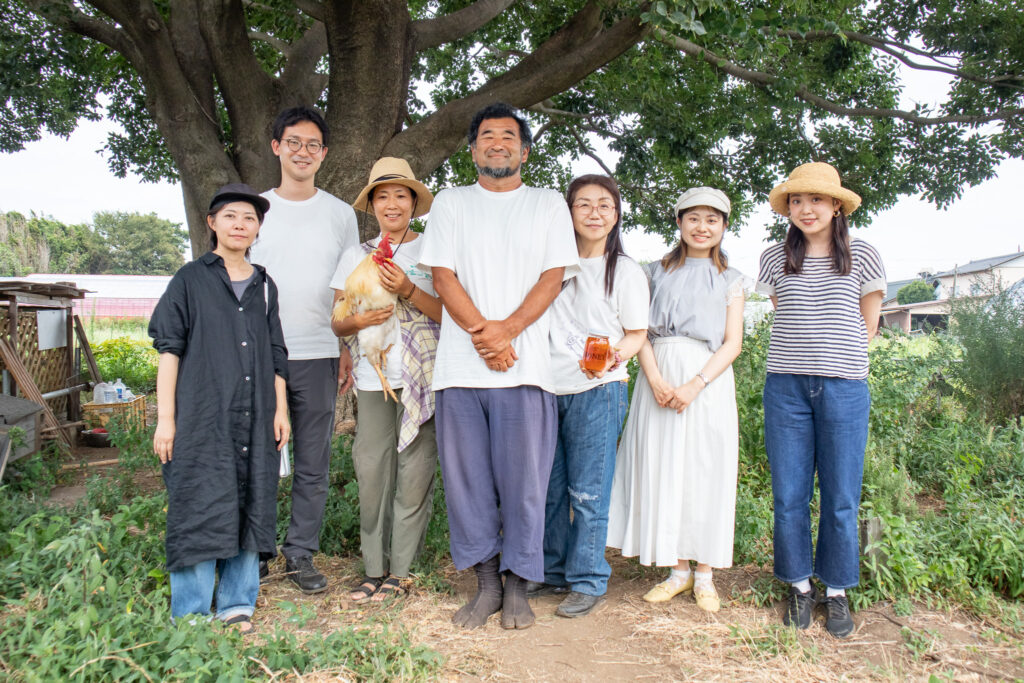
In this interview, we delved deeply into Inoue-san’s journey of building Niko Niko Farm from the ground up, and heard about the numerous challenges he faced in pursuing his vision of a universal farm where anyone can engage with nature.
Visitors to the farm are struck by its breadth—not only the sight of vegetables growing pesticide and fertilizer-free across vast fields, but also the diverse activities underway, including soy sauce and miso production, beekeeping, and more. Niko Niko Farm is also a place where visitors can learn with peace of mind and find their own place. This interview reaffirmed how smiles and warmth are born from this space where the farm’s people, nature, and animals interact with each other.
In October 2025, as part of our activities aimed at reducing food loss, Lively co-hosted a regenerative agriculture seed-sowing experience program with Niko Niko Farm. This collaboration was conducted with the goal of creating an opportunity to reflect on daily choices and the nature of food, inspired by Inoue-san’s philosophy.
Moving forward, we will continue to create spaces where more people can feel closer to agriculture and, through learning and awareness, consider sustainable approaches to food.
Interview Date: August 7, 2025
Ryoko Nishi / Writer
Tsuyoki Taneda & Riko Abe / Lively