Environment
12/25/2025

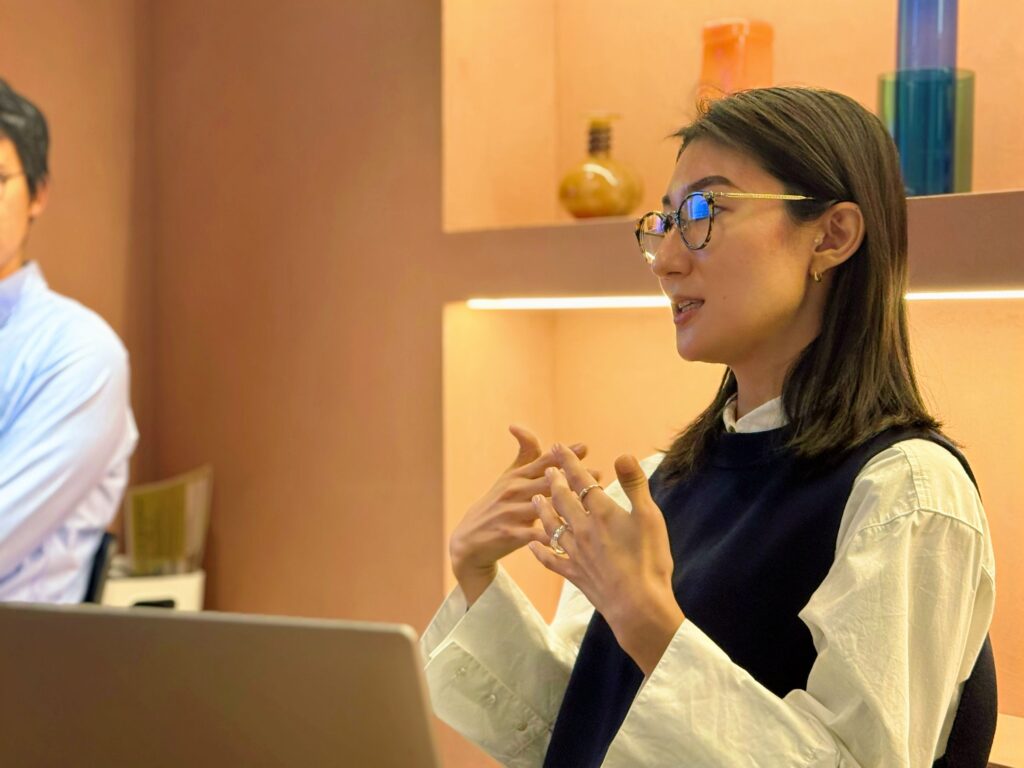
Narumi Saito works as a climate change risk consultant for Anthesis Group, a UK-based consulting firm specializing in sustainability. She confronts climate change issues at the forefront worldwide and continues to take action as a board member of the transition finance initiative “Climate+Positive Investing Alliance (C+PIA).” This time, we traced her journey from the spark that ignited her interest in sustainability to the challenges she faced to reach her current role, and heard her thoughts on the future ahead.
Narumi Saito
Anthesis Group Climate Change Risk Consultant / Climate Positive Investing Alliance (C+PIA) Board Member
After working on IT system implementation at a Japanese consulting firm, she moved to the UK in 2022 to work at the forefront of climate change solutions and mitigation. Following roles at two climate startups, she joined Anthesis Group in 2023. As a climate change risk consultant, she supports UK and European companies with their Task Force on Climate-related Financial Disclosures (TCFD) reports. As a C+PIA Board Member, she manages networking events in London and Tokyo, builds the community, and contributes to developing the Climate Investment Guideline.

As a child, I was quite selfish, constantly pestering my mother with demands like “I want a toy” or “I want a dog”—always pushing for what I wanted. “Obsessive” sounds negative, but it’s more that once something captured my interest, I’d abandon everything else and dive in headfirst. Even now, having grown into the person I am today, that drive to charge toward my visions probably hasn’t changed.
I don’t think I was until university. I never considered going outside Japan, and I didn’t even get my first passport until I was 18. As part of the first generation in my family to attend university, my entire education from elementary through high school was focused solely on getting into college. I had no concrete dreams for the future. I chose the Business Department at Hosei University because it seemed to offer broad future possibilities, but honestly, I had no idea what I wanted to do after graduation.

The initial catalyst was having the opportunity to study abroad in the Philippines during university. I went out of vague interest, but was shocked by the overseas lifestyle, unimaginable in Japan. That opened my eyes to the world. During my sophomore summer break, I embarked on a solo trip starting in Rome, traversing Western and Eastern Europe, and ending in Istanbul, Turkey. During winter break, I also spent about two months touring Southeast Asia and did an internship in Vietnam. I became completely absorbed in experiencing different countries and cultures around the world.
During my first language study abroad, I barely spoke anything but Japanese, so my English didn’t improve much. It was during my backpacking trip across Europe that I truly developed the skill of forcing myself to speak. Meeting new people every day, booking lodging on my own, figuring out trains… To communicate what I wanted to do or express my thoughts, talking a lot was essential.
Japanese people develop the ability to comprehend difficult texts for university entrance exams, but I feel there are few opportunities to practice speaking. Traveling abroad stripped away any sense that speaking was bothersome or embarrassing.

During my university years, I discovered the book “The China Study” through social media. Having recently lost my grandfather to cancer, the idea that cancer rates were linked to meat consumption was shocking to me. That’s when I started following a pescatarian diet (*a diet primarily plant-based but including seafood). For me, this experience felt like the first step toward engaging with environmental issues.
Yes, that’s true. However, when I graduated and started working at an IT consulting firm, I was so focused on learning all the new things right in front of me that my diet naturally reverted back. Back then, my mission was simply to earn money and get promoted. I didn’t even know what I truly wanted to do.
Then, about two years after joining the company, our corporate mission suddenly shifted to “Achieving the SDGs.” I assume it was a response to the changing times, but I wondered, “What does this mean when we don’t directly engage in SDG-related business?” I decided to share my thoughts with my supervisor and then the president.
The company had a very open atmosphere, so the president took it positively and said, “Well then, why don’t you present it at a company-wide meeting?” That gave me the chance to raise the issue. From there, I launched an SDGs initiative within the company, working on things like eliminating plastic use internally and sharing SDGs information via email newsletters. Many people around me cooperated, and I was truly blessed with a supportive environment and people. However, then the pandemic hit, and we had no choice but to suspend the activities.
Yes, my work also shifted to remote. Working from home eliminated commute time, giving me more free hours to delve into topics I was interested in or current events. While I was researching for the company newsletter as part of our SDGs initiative, I came across the issue of climate change. It caught my attention. I couldn’t help but wonder why no one was talking about this massive problem affecting all living things.
Personally, after realizing the problem, I tried various things I could do myself. Switching my home electricity to renewable energy, using eco-bags, stopping plastic products, going vegan… But I quickly realized there’s a limit to what one person can do. So, I decided to change jobs, wanting to dedicate as much of my time as possible to the climate change issue. However, back then in Japan, the mindset of “SDGs = compliance” was still very strong, and job hunting was tough. Ultimately, a friend in the UK told me about the Youth Mobility Scheme Visa, and I went to the UK without securing a job beforehand. But strangely, I had this conviction that it’ll definitely be okay.
Personally, after realizing the problem, I tried various things I could do myself… But I quickly realized there’s a limit to what one person can do. So, I decided to change jobs, wanting to dedicate as much of my time as possible to the climate change issue. However, back then in Japan, the mindset that SDGs was just about compliance was still very strong, and job hunting was tough. Ultimately, a friend in the UK told me about the Youth Mobility Scheme Visa, and I went to the UK without securing a job beforehand. Strangely, though, I had this conviction that everything would definitely be okay.
In the second part of the interview, Narumi-san will discuss her journey from becoming interested in climate change issues to taking action.
Stay tuned!
Ryoko Nishi / Writer
Tsuyoki Taneda & Riko Abe / Lively