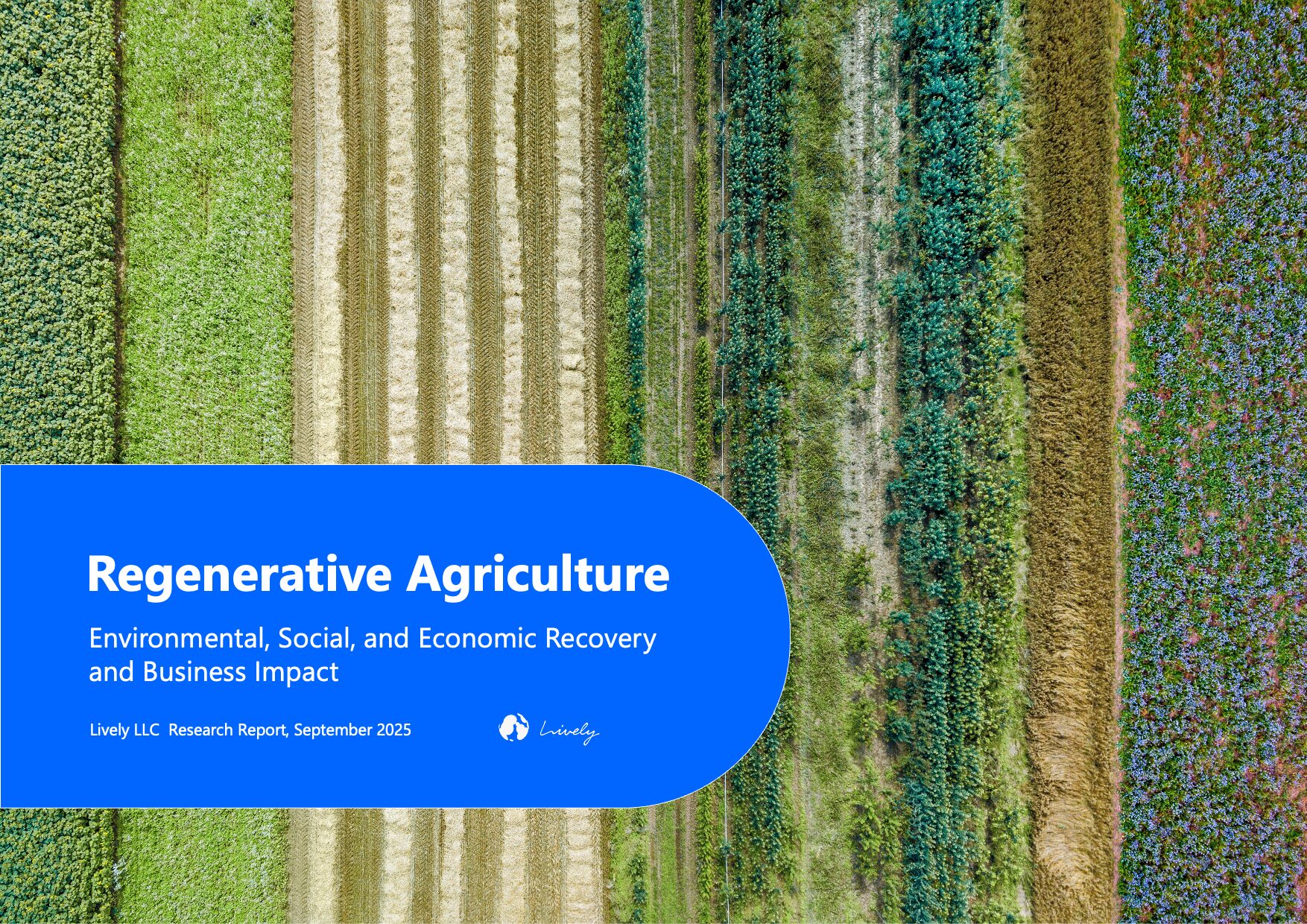
Regenerative Agriculture: Environmental, Social, and Economic Recovery and Business Impact
09/30/2025
Regenerative agriculture represents a compelling approach to building sustainable food systems while restoring soil health and ecosystems.
This report organizes its core concepts, international trends, the challenges faced by corporations and farmers, and the current state of its implementation in Japan. Internationally, major food and beverage manufacturers are expanding their initiatives through quantitative targets and investments, making regenerative agriculture a rapidly growing component of corporate strategy.
Although it is still in its early stages in Japan, unique development is expected by leveraging established local circular practices and their compatibility with existing agricultural techniques.
Message from the Project Member
Implementing and sustaining regenerative agriculture presents significant challenges for farmers to tackle alone. Success requires a partnership between farmers and corporations, as well as a collective commitment from government and consumers.
Key factors for progress include robust certification systems, data-driven assessments, and long-term technical and financial support. This transition does more than protect the environment; it strengthens food security and builds resilient local communities.
To deepen the insights from this report, Lively offers the "Experiential Regenerative Agriculture Education Program." By combining lectures with hands-on field experience, we support our clients in taking their next step forward together.